
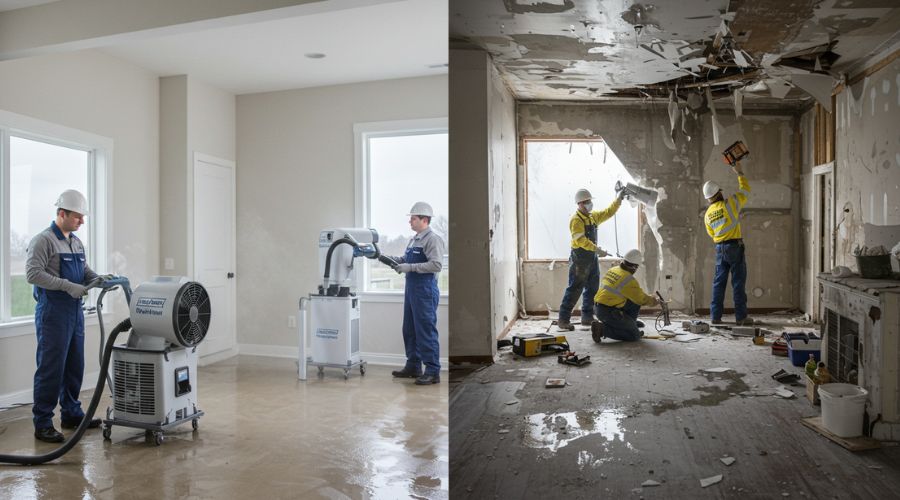
Water damage doesn’t knock before it barges into your life—it floods, leaks, or seeps its way in, leaving chaos in its wake. But once the initial panic settles, homeowners and property managers are often faced with two big terms: water mitigation and water remediation.
Here’s the deal: [water mitigation vs remediation]
Water mitigation is your emergency response team.
Water remediation is your full restoration squad.
Let’s unpack this—deeply, clearly, and with the authority and trustworthiness you expect when protecting your biggest investment: your home.
Water Mitigation vs Remediation
Water mitigation and remediation are distinct processes for dealing with water damage. Mitigation focuses on preventing further damage and stabilizing the situation, while remediation addresses the existing damage and restores the property to its pre-damaged state.
Mitigation Water is a quick response to an emergency, while remediation is a more comprehensive process involving cleanup, repair, and water restoration.
Water Mitigation
Focus: Minimizing initial damage from water and preventing further problems.
Process: Extracting standing water, drying affected areas, and making temporary repairs.
Timing: Immediate response to a water leak or flood.
Goal: To contain the water and prevent it from causing more damage.
Water Remediation
Focus: Cleaning, sanitizing, and restoring materials after water damage.
Process: Involves repairing or replacing damaged materials, addressing health hazards (like mold), and restoring the property to its original condition.
Timing: Follows mitigation water and is a more extensive process.
Goal: To return the property to its pre-damaged state.
The Chain Reaction of Water Damage: From Chaos to Clean-Up
Water damage doesn’t just cause wet carpets. It compromises your home’s structural integrity, ruins possessions, breeds mold within 24-48 hours, and risks long-term health issues. The process of dealing with this must be systematic. And it starts with water damage mitigation.
Part 1: Water Mitigation—The First Line of Defense
What is Water Damage Mitigation?
Water damage mitigation is the process of reducing or preventing the amount of water damage that happens after a flood, leak, or burst pipe. It’s fast. It’s focused. It doesn’t waste a second.
Key Goals of Mitigation:
Stop the source of water (if applicable)
Extract standing water
Dry affected materials and areas
Dehumidify the space
Prevent mold growth and structural deterioration
Common Water Mitigation Techniques
| Technique | Purpose |
|---|---|
| Water Extraction | Removing water using pumps or vacuums |
| Dehumidification | Pulling moisture from the air using industrial dehumidifiers |
| Structural Drying | Using air movers to dry walls, floors, and ceilings |
| Board-Up and Tarping | Sealing off damaged areas to prevent exposure |
| Temporary Repairs | Quick fixes like plumbing patches or shutoff installations |
Mitigation is not about fixing everything—it’s about buying time and preventing escalation.
Part 2: Water Remediation—The Water Damage Restoration Journey
What is Water Remediation?
Once the situation is stable, remediation begins. This is where real cleanup and water restoration happen. It’s detailed, labor-intensive, and absolutely necessary to prevent long-term consequences.
Core Components of Remediation:
Assessing the full extent of water damage and remediation
Removing contaminated materials (drywall, carpets, insulation, etc.)
Treating and preventing mold and mildew
Sanitizing surfaces to eliminate health risks
Repairing or replacing structural and cosmetic elements
The Step-by-Step Remediation Process
Assessment & Inspection – Detailed evaluation of affected areas, including behind walls and under flooring.
Moisture Mapping – By using moisture meters and infrared cameras, you can detect hidden dampness.
Material Removal – Taking out all materials that are unsalvageable or could harbor mold.
Cleaning & Disinfection – Using EPA-approved solutions to sanitize surfaces and air.
Drying & Monitoring – Ensuring all moisture is gone with continued equipment use and monitoring.
Water Damage Restoration – Rebuilding and replacing what was lost—drywall, flooring, cabinetry, etc.
Water Mitigation vs Mold Remediation: A Side-by-Side Showdown
| Feature | Water Mitigation | Water Remediation |
|---|---|---|
| Timing | Immediate (within hours) | After mitigation (can last days to weeks) |
| Purpose | Prevent further damage mitigation | Repair existing damage |
| Scope | Stop the water, stabilize the area | Full cleanup and rebuild |
| Urgency | High | Moderate to High |
| Cost | Lower (initial response) | Higher (full damage restoration) |
Water Mitigation vs Remediation: You Need Both
Here’s where we zoom out and focus on what matters for you, the reader, the homeowner, or the curious browser.
Too often, people think that if the water’s gone, the job is done. Wrong.
Skip mitigation, and the water spreads like gossip in a small town.
Skip remediation, and the health risks quietly grow in the walls and floors.
Both stages are essential. One is emergency triage. The other is holistic healing.
The Mold Menace: Remediation’s Most Critical Role
Water left untreated = mold. And not just the black stuff you can see—spores travel fast. Some mold varieties are toxic, triggering asthma, allergies, and even neurological issues.
Remediation focuses heavily on:[water mitigation vs mold remediation]
Identifying mold types
Using HEPA filtration systems
Containing affected zones
Removing contaminated materials safely
How Professionals Separate the Two in Practice
Professionals who do water damage work almost always split their teams into mitigation and remediation crews.
Mitigation crew: Arrives fast, stabilizes, and installs equipment.
Remediation crew: Comes in once safe, begins demolition, and rebuilds.
Each role requires specialized knowledge and certifications (like IICRC—Institute of Inspection, Cleaning, and Restoration Certification).
Why You Can Trust What You’re Reading
We’re not a company trying to sell you cleanup services. This is your friendly neighborhood blog, passionate about delivering clarity with credibility.
What makes this blog aligned:
Based on vetted documents and verified remediation/mitigation protocols.
Informed by IICRC standards and professional best practices.
Transparent, non-promotional, and strictly informative.
Conclusion of Water Mitigation vs Remediation:
Water damage mitigation isn’t just a puddle problem—it’s a process problem. And without understanding both water mitigation and remediation, you’re only seeing half the picture.
So, whether you’re navigating your first pipe burst or just researching for future emergencies, remember:
Mitigation stops the bleeding.
Remediation heals the wound.
Together, they save homes, protect health, and prevent costly surprises.
Liked what you read? Bookmark this blog for more homeowner clarity. No sales pitch—just smart, jargon-free info to help you make confident decisions.
Frequently Asked Questions(FAQs)?
Q1. What is the difference between water mitigation and water remediation?
Answer:
Water mitigation involves stopping water damage, minimizing damage, and stabilizing the property. This includes actions like extracting water, drying out structures, and making temporary repairs.
Water remediation comes after mitigation and focuses on cleaning, repairing, and restoring everything to its original condition. It includes mold removal, sanitization, material replacement, and full damage restoration work. Both are essential parts of a complete water damage and remediation recovery process.
Q2. Do I need both mitigation and remediation after water damage?
Answer:
Yes, in most cases, you need both. Water mitigation is necessary to contain and control the immediate damage from water, but without remediation, your property may still harbor moisture, mold, and hidden issues. Think of mitigation as the emergency stopgap and remediation as the long-term solution. The consequences of skipping either can be costly repairs or health risks down the line.
Q3. How quickly should water mitigation begin after a flood or leak?
Answer:
Immediately—ideally within the first 24 to 48 hours. The faster mitigation begins, the better your chances of minimizing damage and avoiding mold growth. Mold can start forming in as little as 24 hours, so prompt action with water extraction and drying is critical.
Q4. Can I handle water mitigation and remediation myself?
Answer:
For minor leaks or spills, you might be able to handle basic mitigation (like mopping up water and using fans). But for anything affecting walls, insulation, flooring, or large areas, professional help is recommended. DIY efforts often miss hidden moisture or fail to properly sanitize, leading to mold, structural issues, and expensive future repairs.
Q5. Is homeowners’ insurance covered for water mitigation and remediation?
Answer:
In many cases, yes—if the damage is sudden and accidental, such as from a burst pipe or appliance malfunction. Usually, damage caused by gradual leaks or flooding is not covered unless you have flood insurance. Always check with your provider to understand your policy’s scope, and document the damage as soon as it occurs.